


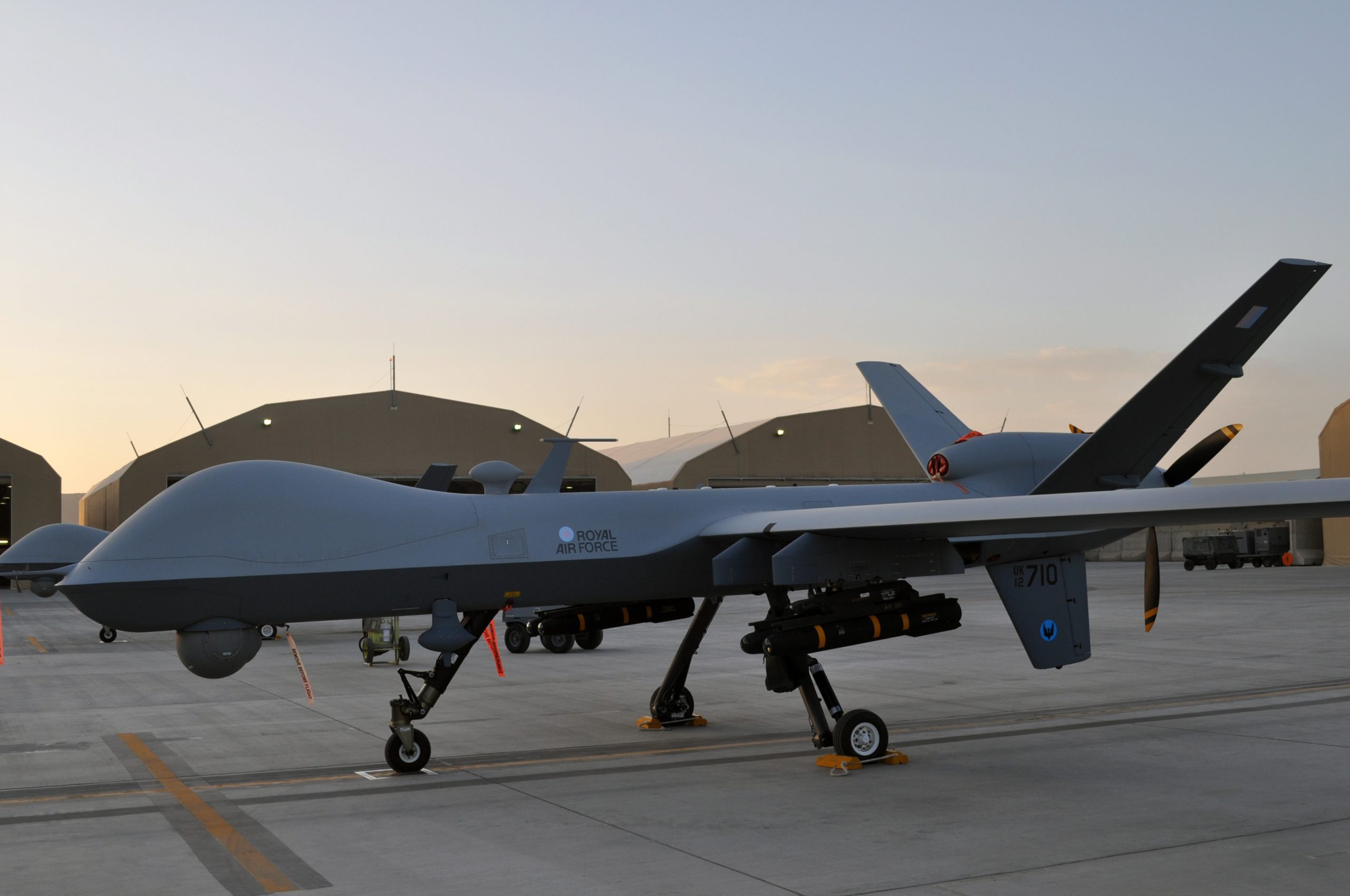











The British startup Stratospheric Platforms, together with the American company Northrop Grumman, are developing a twin-engine hydrogen stratospheric drone that will be used to provide 5G cellular communications. According to Aviation Week, the diameter of the cellular coverage using the device will be up to 140 kilometers.
Today, several companies in the world are developing unmanned aerial vehicles that could provide communications in hard-to-reach areas. It is assumed that with the help of such devices, cellular operators will be able to expand their subscriber base and save money on the construction of cell towers.
A promising stratospheric hydrogen drone is being developed according to a high-wing design with a V-shaped tail unit. The UAV’s wingspan will be 60 meters. The device weighing 3.5 tons will be able to fly at an altitude of 18.3 thousand meters for nine days. The first flight of the device is scheduled for 2022.
Other details about the new drone were not disclosed. Previously, Stratospehric Platforms tested a 4G communication system for aircraft. The tests were carried out on a modified Grob G 520 high-altitude reconnaissance aircraft. During the tests, the aircraft flew at an altitude of 13.7 thousand meters.
The developers managed to achieve the speed of data transmission to subscribers on the ground in 70 megabits per second and from subscribers – in 20 megabits per second. The cellular communication system could be improved to support the 5G standard.
At the end of September 2020, the Japanese company HAPSMobile tested the promising pseudo-satellite Sunglider in flight at an altitude of 19.2 thousand meters. The flight duration of the drone was 20 hours. The device provided coverage of the LTE network. Several subscribers connected to it and made a series of video calls using smartphones and computers.
