










Planets and the Moon are heavenly bodies that we see in the sky. Do you know what they do to your brain? Most of us don’t even realize how much our emotions and psychological states can be affected by the planets. In astrology, these celestial objects have a profound effect on human behavior because it is believed that they affect everything from someone’s love life to their day-to-day moods.
About the Planets and the Moon
Astropsychology is an emerging field that studies planetary movements, phases of the Moon, alignments with other celestial bodies in the solar system as well as various cycles.
The Moon
The moon has a well-known influence on earth’s tides, but is it possible that it also affects gamblers’ behaviors? There are some studies that claim so. In one study done by psychologists from Stanford University in California, researchers analyzed data from several hundred people including gamblers from JokaRoom, who were monitored as they played slot machines over two years. The results showed the Moon has many effects on gamblers’ behavior because it influences their daily lives: for example, it affects how they sleep and when they go out at night.
Mercury
It’s smaller than any other planet: Its diameter measures just 487 miles (778 km), compared with 864 miles (1,416 km) for Venus, 586 miles (994 km) for Earth and 692 miles (1120 km) for Mars.
Mercury is also known as an “eccentric” planet because it doesn’t orbit a central sun body like most other planets do — instead, Mercury orbits so close to ours that it doesn’t get any sunlight directly from our star; instead it receives light reflected off of its own surface from this distant sun body!
Venus
Venus is the planet of love and beauty, art and music. It’s also the planet of romance, relationships and sexuality.
Venus is a passionate planet that represents self-expression in all its forms — whether it’s writing poetry or singing a song about one’s feelings for someone else. As a result, Venusians tend to be expressive individuals who enjoy being close with others (and often have many friends). They may even have more than one romantic partner at a time!
Venusians are social creatures who thrive on connection with others; they’re attracted to those who make them feel good about themselves through words or actions (or both). This makes them especially appealing as partners because their confidence gives off vibes that attract people like magnets attract metal objects!
Mars
Mars has a mass of 6.42 x 10²² kg (26.21 x 10¹⁸ pounds), which makes it slightly less dense than water — but still denser than air! Its average density is 0.38 g/cm3.*
The surface temperature on Mars ranges from -80 degrees Celsius (about 260 F) at night to +20 degrees Celsius (about 68 F) during the day; however, temperatures drop much deeper into its interior where water ice exists.
Jupiter
Jupiter is the largest planet in the system, and it’s also one of the most important. The fifth planet from our sun, Jupiter has a very strong gravitational pull on everything around it — including gamblers!
It has an atmosphere that contains more than 90 percent hydrogen gas (H2), which gives Jupiter its reddish color. This gas makes up about 10 times more than Earth does! The pressure at its surface is about 1 million times greater than that at sea level on Earth; this means that if you were to stand under water on Earth’s surface for just one second, you would only be able to feel about 1/3rd of what can be felt here at Jupiter’s equator!
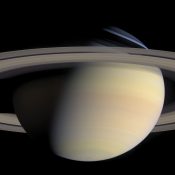
Saturn
Saturn is associated with the need for structure, discipline and control. A person who has Saturn as their Moon sign will likely be more organized than those born under other signs. They realize that life is a process of learning, growing and evolving through experiences rather than simply sitting around waiting for things to happen. As such, they tend to be hard workers who put in long hours at work but still feel like they have time left over after work hours so they can spend quality family time together. This can lead them to become very ambitious about their careers or projects; however these ambitions may lead them into trouble if not controlled well by self-discipline (Saturn).
Neptune and Uranus
They’re gas giants, meaning they have a lot of mass but little volume. Because of this, they’re much denser than the rocky planets like Earth or Mars.
Neptune is the 8th planet from the sun and orbits it every 165 years (roughly 20 hours). It’s so far away that its light takes almost 29 years to reach us here on Earth! As a result, it takes more fuel than any other planet in our system: more than 30kg per second! But despite having such high temperatures due to its proximity to other bodies in space — namely Jupiter and Saturn — Neptune is still ice-covered with ammonia clouds at its poles. The most recent observations show evidence of liquid water below those clouds too!
