







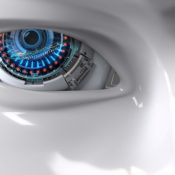








Consciousness is the enigma that arouses the greatest curiosity among scientists, philosophers, and people in general. There are various theories about consciousness (e.g., materialism vs. dualism), but no one can prove with certainty what exactly consciousness is and how it is related to the human mind. There are two main approaches to this question of consciousness: the theory of relational consciousness and the theory of non-relational consciousness. The latter argues that consciousness is not related to the brain, but is all about the mind/consciousness itself, which means that there will never be a single explanation for consciousness or why it exists at all. The idea behind this approach comes from the work of Roger Penrose (a retired Oxford University biophysics professor), who wrote a book 15 years ago called Understanding the Mind, in which he tries to explain more about consciousness and concludes that consciousness is something separate, existing on its own. The relational approach comes from the work of neurobiologists such as Jean-Dominique Baubiat and Pascal Osterhout, who argue that consciousness can indeed be defined by how it relates to the brain.
The human mind as a mysterious and complex system
Self-consciousness is a wonderful tool for understanding and making sense of the world around us. The problem is that self-awareness does not come in a simple form. Self-awareness is not something concrete, rather it is related to abstract concepts such as time, space, place and emotions. Some people are more aware of their feelings than others. Although self-awareness has existed since the beginning of time, only in the last few centuries have we begun to understand how it works and what it can do for us. People who have self-awareness today are simply different from those who are not yet born. They can be compared to atoms, with which we can study their behavior and make predictions about them based on observations made during their lifetime. These predictions help us understand things about ourselves that we would never know if we did not have self-awareness. For most human beings, however, this is not a simple situation. The ability to be aware of our own feelings may give humans some advantages in terms of survival and reproduction, but it can also be a disadvantage when it comes to gaining knowledge about the world around us and making connections.
A Brief Introduction to Quantum Theory in Biology and Physics
Quantum mechanics is a branch of physics that studies the behavior of subatomic particles in empty space. It also deals with the fundamental laws governing atoms, molecules, and elementary particles. This is known as quantum physics or quantum mechanics. It has a great impact on the daily lives of scientists because of its ability to predict the behavior of all the particles we can see: atoms, molecules, and elementary particles. The laws governing these forces are not deterministic (obvious in this case) but probabilistic.
A brief overview of consciousness and its relationship to the human mind
Consciousness is one of the wonderful things of human existence, and we humans have a complex relationship with it. Whether the relationship is positive or negative, consciousness has always been a topic of discussion in the entertainment industry.
While many people have understood the benefits of consciousness, there are still unanswered questions as to whether or not our consciousness is an “illusion.”
In this section I am going to give a brief insight into how consciousness works and how it relates to the workings of the human brain. Also, what does consciousness mean in the context of artificial intelligence (AI)?
What is the difference between human consciousness and the consciousness of other animals?
This chapter discusses three different levels of consciousness and the difference between them.
Level 1 is the ability to recognize and respond to stimuli. Humans can read, hear, and see, but animals cannot. They don’t understand what we do. We are able to see and respond to things we encounter in the environment, but animals do not have this ability.
Level 2 is a species-specific feature common to all species, including humans: they can think about future events (all animal species have some level of intelligence). Animals also have the ability to use tools-they have memories that allow them to remember past experiences. However, these memories are not perceived as conscious, because they influence their behavior only when present in certain circumstances (for example: a chimpanzee attacking another chimpanzee will remember
